




Climate protection and the needs of industry – we combine the two
We build infrastructure for the transportation of CO2, thereby facilitating a comprehensive Carbon Management. Carbon management is the final building block for achieving climate targets. In future, carbon flows and cycles must be managed accordingly in order to prevent or compensate for CO2 emissions. In this context, we move CO2 from the place of its capture to the destination of its further use or storage.
This way, we combine our efforts towards climate protection with the economic and ecological interests of our customers.
To achieve sustainable climate protection in line with the Paris Agreement on international climate protection (COP21) and the German climate protection goals, we need renewable energies, green gases such as hydrogen from renewable sources and avoidance or compensation of CO2 emissions. To intensively support this, OGE is providing a hydrogen infrastructure.
Nevertheless, in a number of industrial production processes CO2 emissions are unavoidable: Cement, lime and glass production or waste recycling, for example, will have to emit CO2 in the future, even if it has switched to renewable energies. Conversely, the entire organic chemical industry with its downstream value chains needs carbon as a raw material. In the medium to long term, there will be a need for so-called negative emissions, i.e. CO2 must be actively removed from the atmosphere and then permanently stored. This can be done naturally (via reforestation and dilution of peatlands) or technically analogue to the CCS process.

Carbon Management
For unavoidable CO2 emissions, a circular economy centred around CO2 can be an efficient solution for climate protection and for businesses. In addition, the integration of carbon dioxide removal (CDR) technologies opens up the possibility of realising long-term negative emissions by actively removing CO2 from the atmosphere. In the long term, offsetting of CO2 emissions through the purchase of CO2 certificates for negative emissions can be an additional possibility.
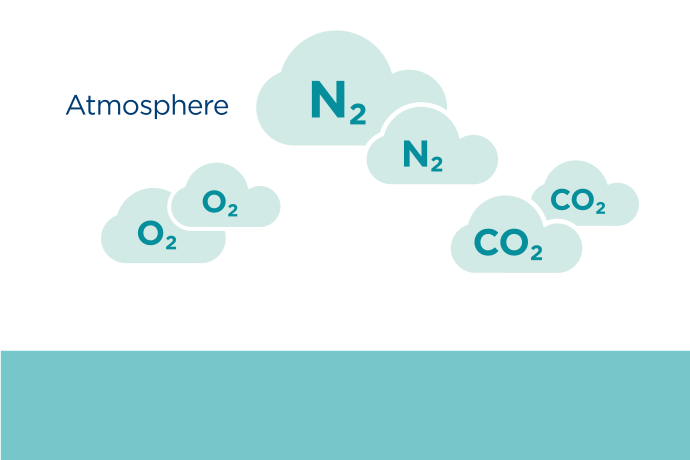
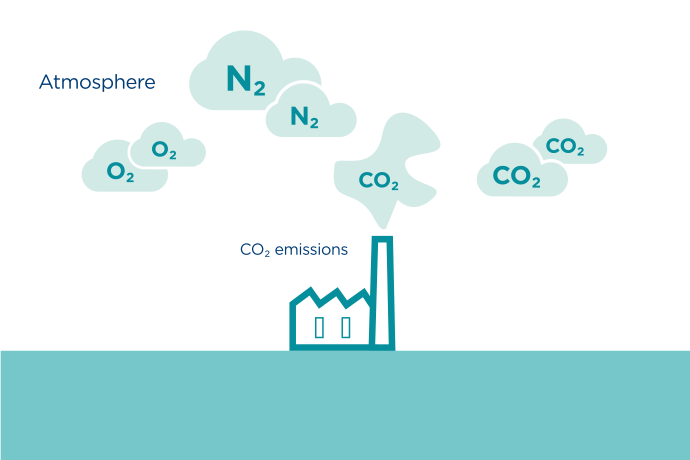
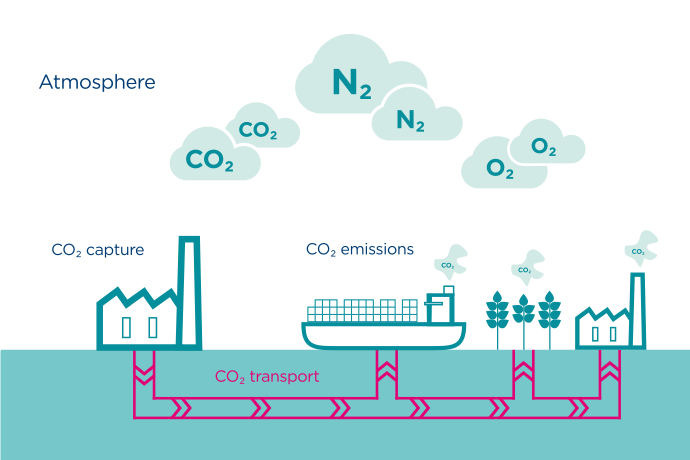
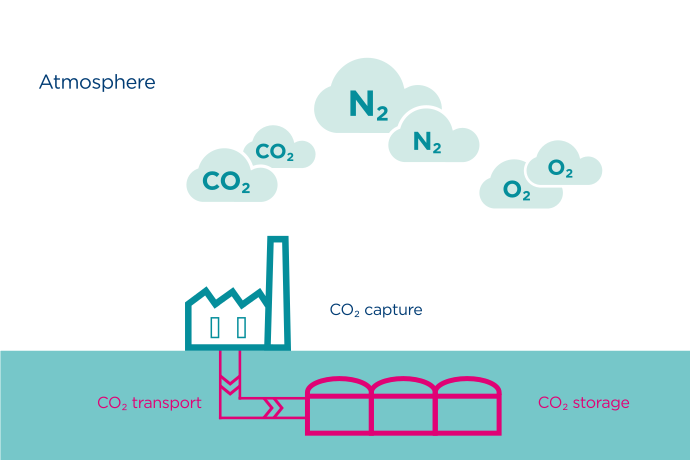
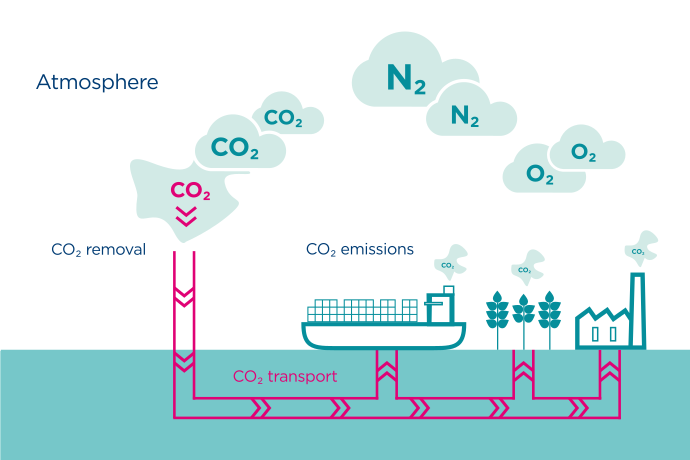
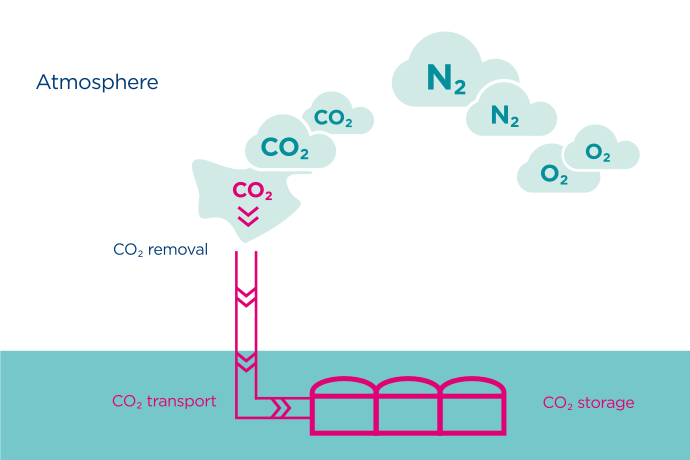
What does OGE achieve through transportation of CO2?
By transporting CO2 between its capture and utilization or its storage, we support the long-term, climate-neutral management of this greenhouse gas.
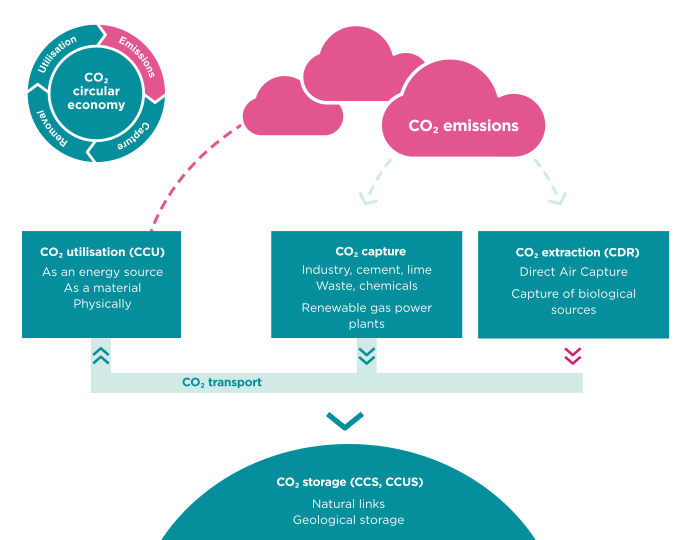
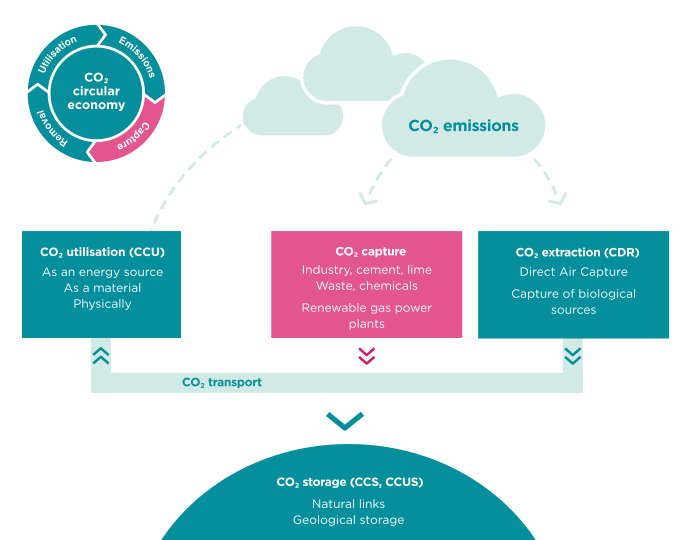
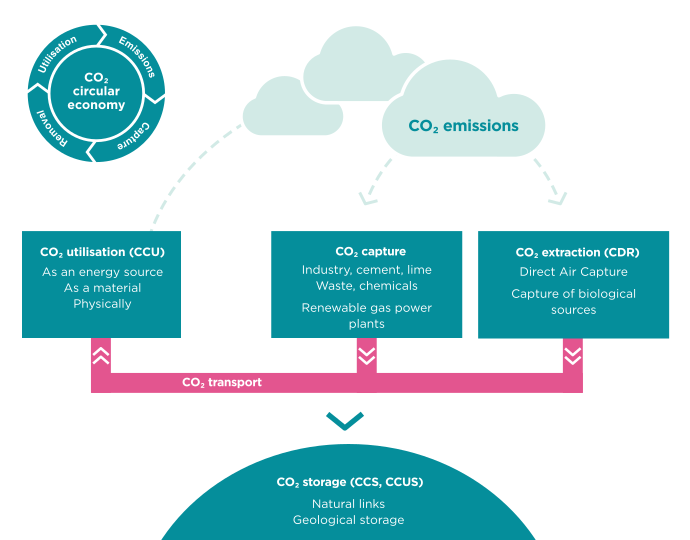
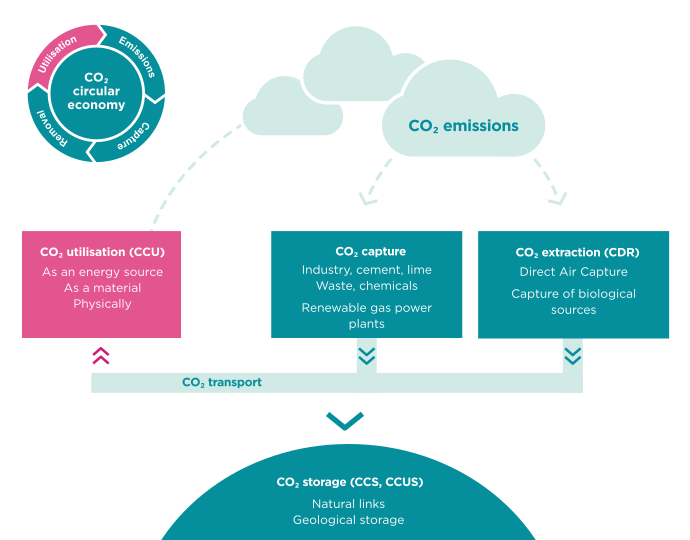
In the long term, carbon or hydrocarbons will still be needed in a climate-neutral system; for example, for air and sea transport or for the chemical industry. For this, the recycling of products containing carbon is becoming ever more important.
But because the need cannot be met through recycling alone, additional CCU measures must be applied. In the glossary, you will find further examples of use of CO2.
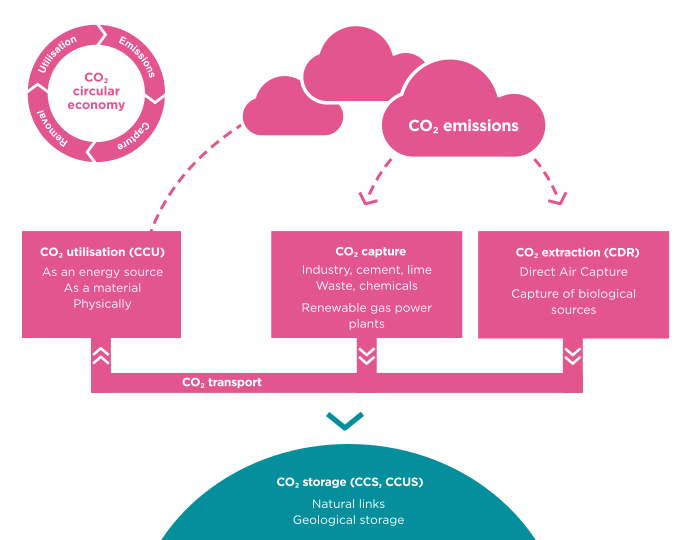
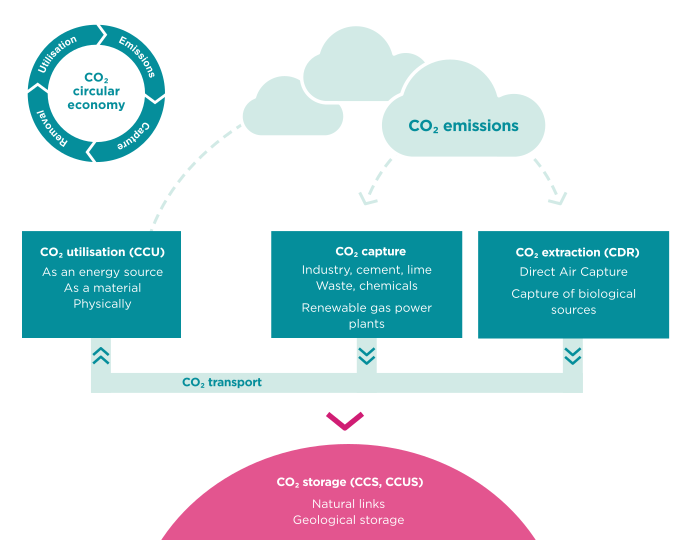
As a general rule, CO2 can be stored as soon as it is captured (CCS Carbon Capture and Storage), as well as after capture and usage (CCUS Carbon Capture Utilization and Storage).

Sources
SWP article: „Carbon Management“: Chancen und Risiken für ambitionierte Klimapolitik (2023), only in German
Kohlendioxid-Speicherungs-und-Transport-Gesetz (KSpTG), only in German