Detlef Brüggemeyer, Technical Managing Director at OGE, said:
“The transformation of our energy system and industry is a major undertaking for society as a whole and requires close, open dialogue with all stakeholders. The submission of the documentation for the spatial impact assessments of the DRC and Ruhbens CO₂ transport corridors provided the opportunity to engage with citizens, towns and local authorities, as well as political stakeholders, at an early stage. It is important to us to hear different perspectives, address concerns and questions, and provide clear and transparent information about these projects. By working together, we can build a shared understanding of the role an efficient CO₂infrastructure can play in achieving climate neutrality.”
Balancing climate protection with a strong industrial region
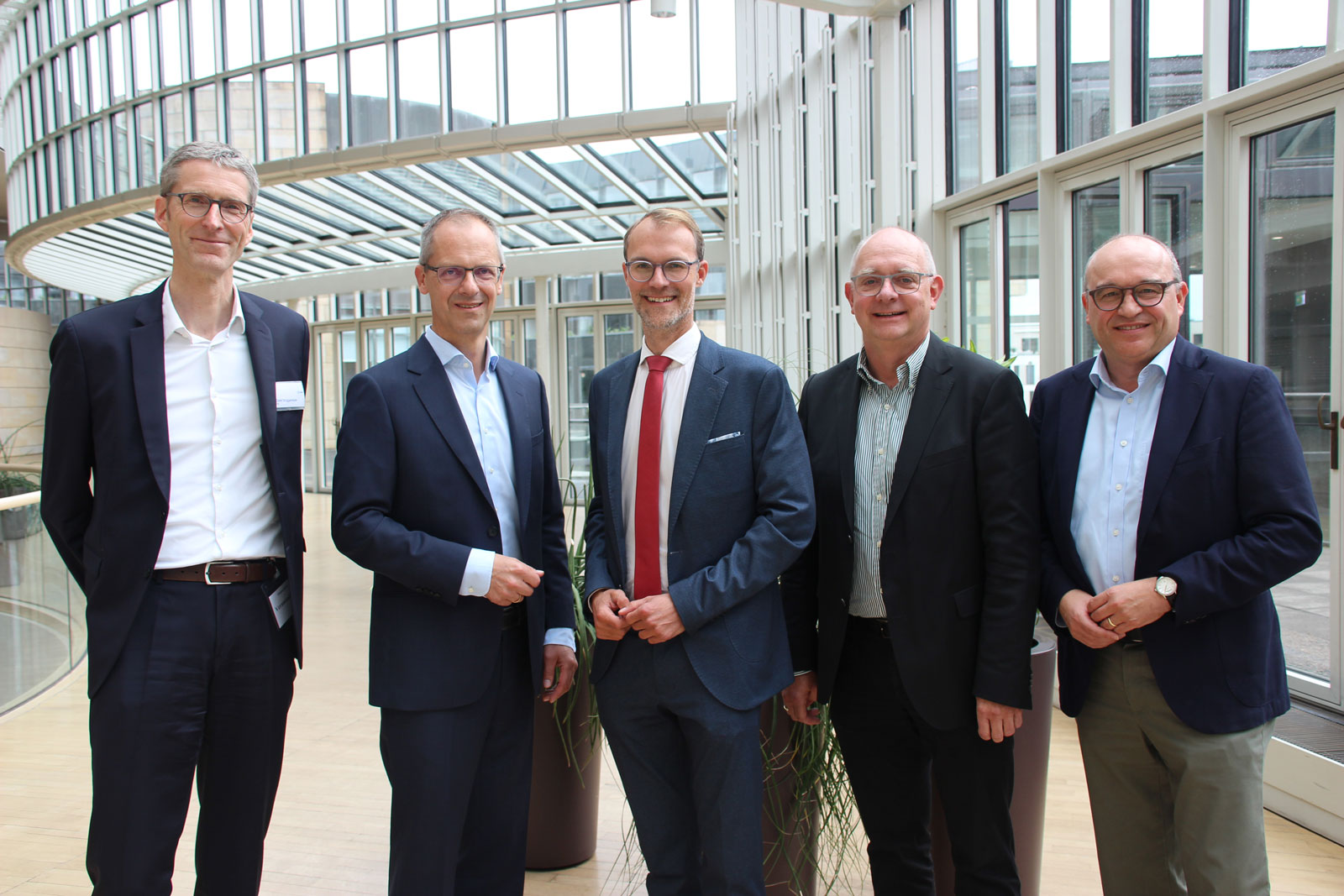
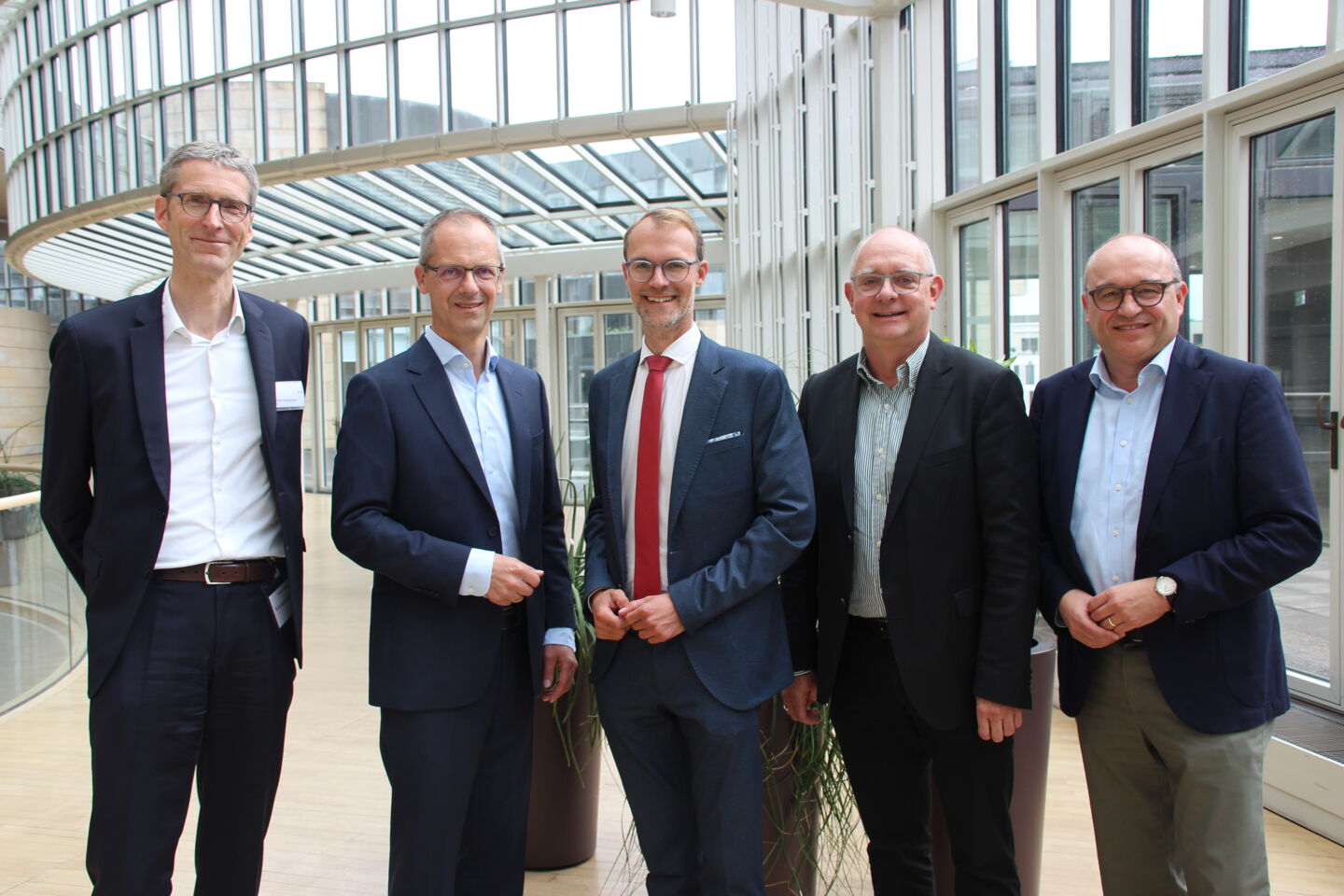
The panellists at the event were Dr Christian Untrieser, spokesperson for the CDU parliamentary group in the North Rhine-Westphalia State Parliament on economic affairs, industry, climate protection and energy; André Stinka, his counterpart for the SPD parliamentary group; Detlef Brüggemeyer, Technical Managing Director at OGE, and Dr Andreas Bode, Vice President of CO₂ and Process Innovation at the Lhoist Group.
For Dr Christian Untrieser, climate protection and the future of the region as an industrial hub are inseparable:
“Climate protection and industrial strength must go hand in hand. To achieve this, North Rhine-Westphalia needs the right infrastructure.”
André Stinka likewise emphasised the need to align the transformation with value creation and employment:
“The transformation must combine climate protection, good jobs and industrial value creation. If we want to become climate-neutral while also maintaining a strong industrial base, we will need modern solutions for electricity supply, hydrogen use and carbon capture.”
Dr Andreas Bode of Lhoist underlined the need for appropriate transport infrastructure from an industry perspective:
“For us, a CO₂ network is of particular importance. Industry needs a clear path forward for emissions that are difficult or impossible to avoid. A reliable CO₂ infrastructure is essential to making this possible.”
Ruhbens and DRC: Infrastructure takes shape on the ground
With the Ruhbens and Delta Rhine Corridor (DRC) projects, OGE is advancing plans for a CO₂ transport infrastructure. The documents for the spatial impact assessment of both projects were presented at the North Rhine-Westphalia State Parliament.
The projects also illustrate how the broader goals of industrial transformation ultimately become tangible at the local level. Pipelines cross regions and run through towns and communities, directly affecting the places where people live. For OGE, technical planning therefore goes hand in hand with early dialogue with local communities.
CO₂ transport and storage are intended to support the transformation, particularly in sectors where emissions from industrial processes are difficult or impossible to avoid. Appropriate transport infrastructure can help companies meet their climate targets while preserving industrial value creation in North Rhine-Westphalia over the long term.
Dialogue as part of the planning process
Delivering infrastructure projects requires not only a reliable political and regulatory framework, but also close dialogue with local authorities and communities. Questions, concerns and input from the affected regions therefore need to be given due consideration at an early stage.
OGE is committed to developing the CO₂ infrastructure transparently and maintaining an open dialogue throughout the projects. The aim is to create the conditions for a climate-neutral and competitive industrial sector while ensuring that local perspectives are reflected in the further planning process.