How can Germany successfully develop a CO₂ infrastructure? And what lessons can be learned from the hydrogen ramp-up? These were the key questions addressed at OGE's 2026 Energy Policy Dialogue in Berlin. Representatives from politics, industry, business and trade associations discussed how infrastructure, markets and investment certainty can be developed in tandem from the outset.
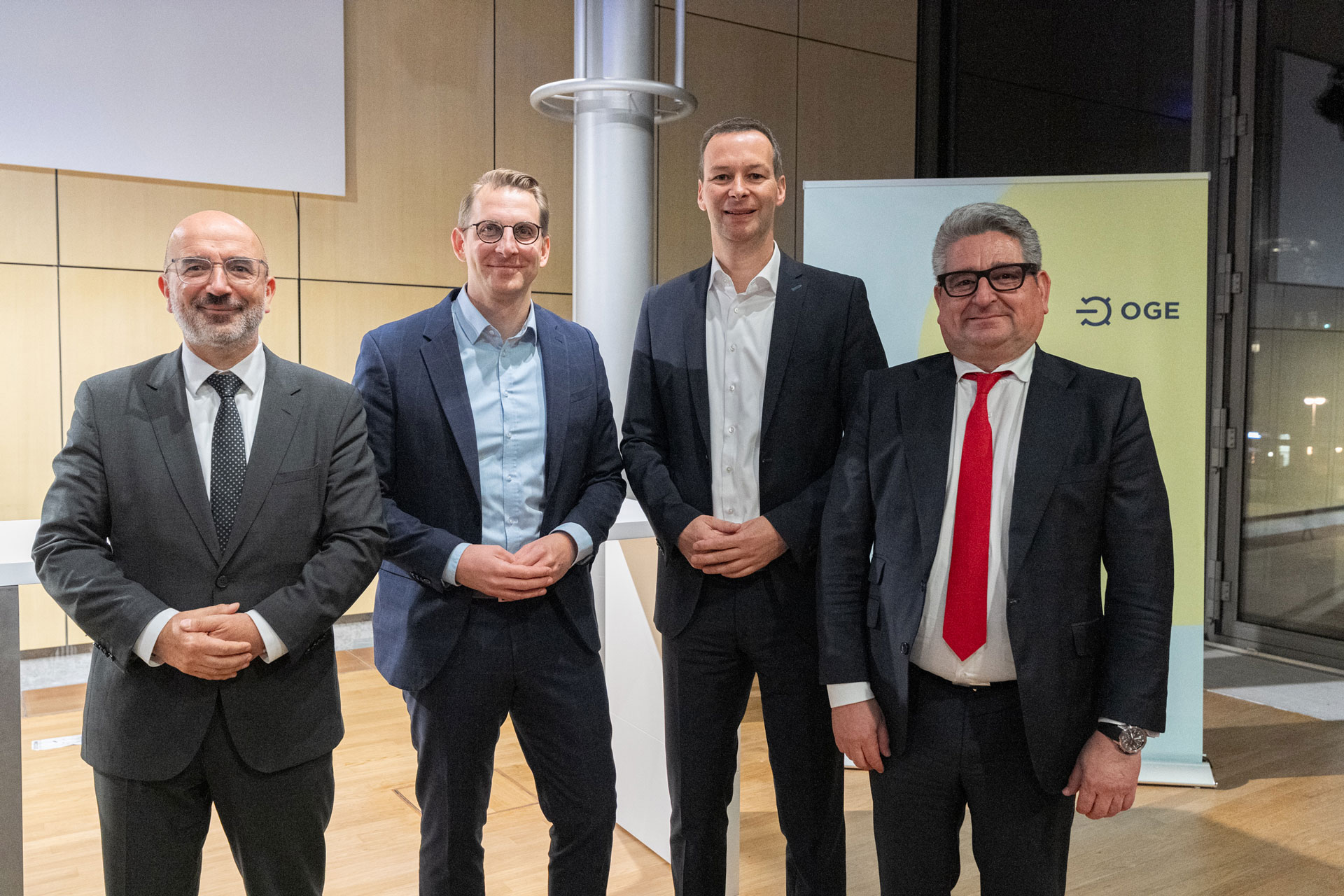
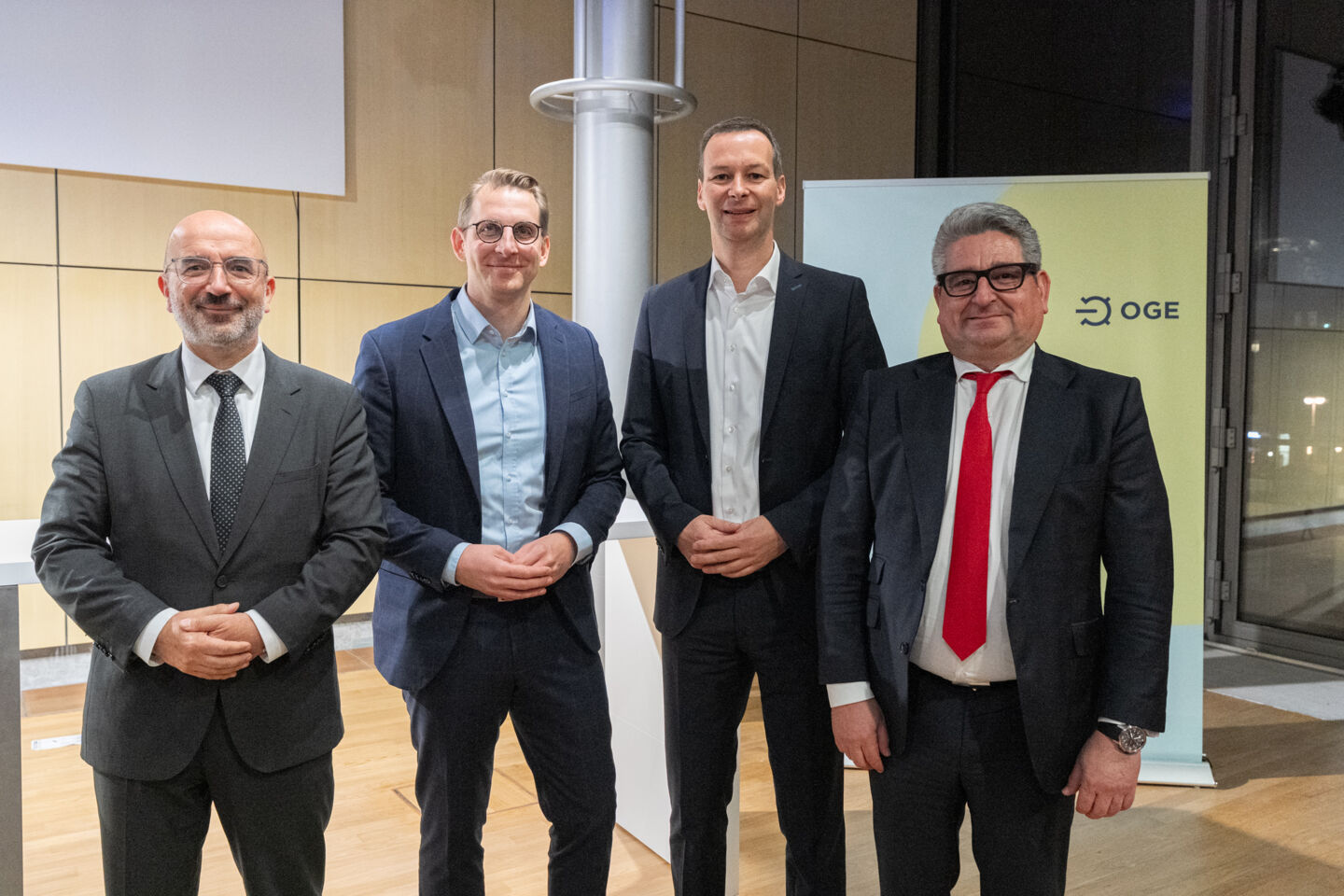
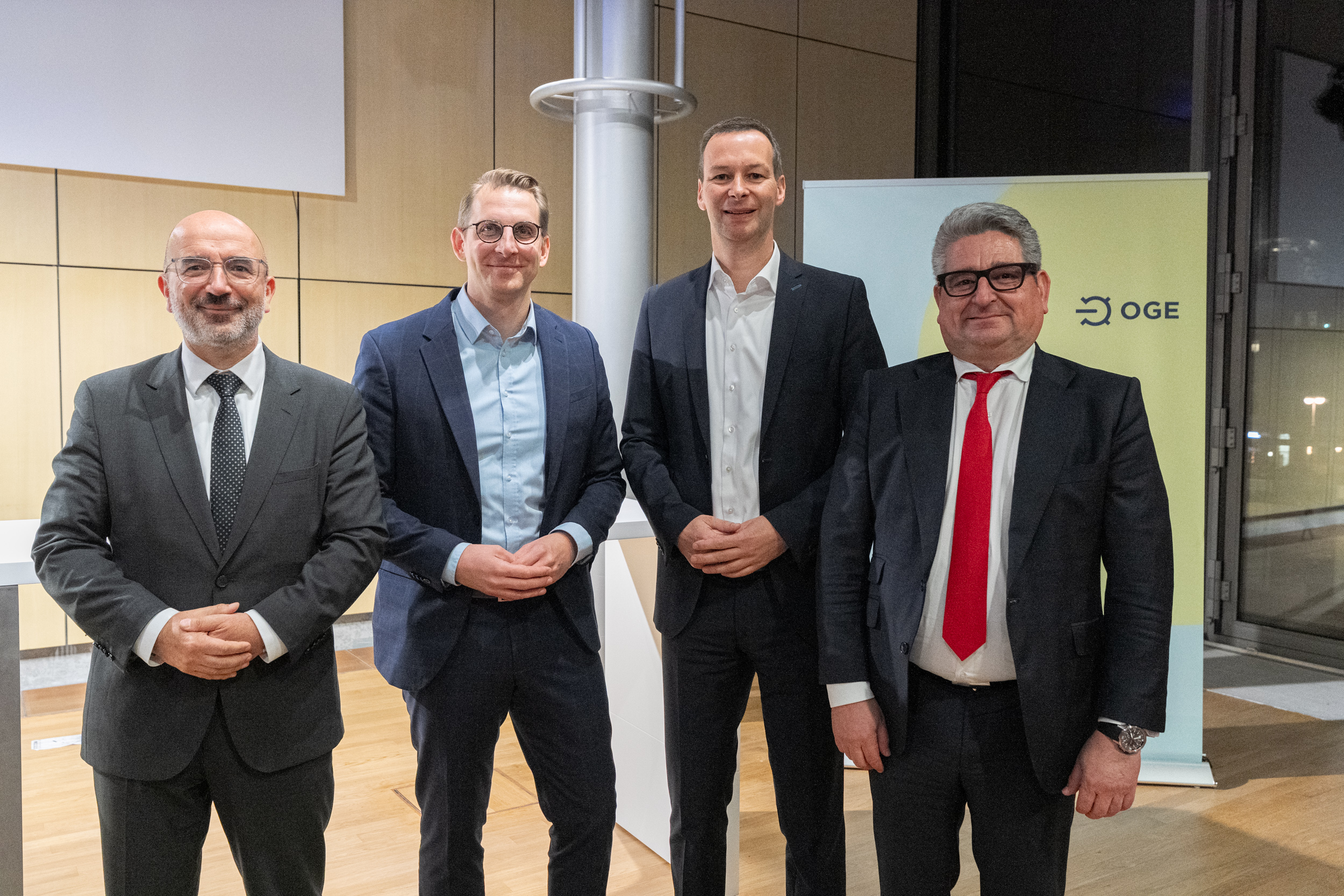
The title of the event hosted by OGE at the Akademie der Künste on Pariser Platz was "From the H₂ Core Network to CO₂ Infrastructure: Successful Models for the Energy Transition". The panel featured Dr Thomas Hüwener, CEO of OGE; Bernhard Kluttig, Head of the Department for Security, Gas and Hydrogen, and Investments at the Federal Ministry for Economic Affairs and Energy; Miguel Lopez, CEO of thyssenkrupp AG; and Manuel Mohr, Chief Executive of the German Cement Works Association (VDZ). The event was moderated by Marco Seiffert.
The discussion highlighted the important progress already made in establishing the hydrogen core network. Key infrastructure is now in place, with the first pipeline sections already operational. Hydrogen is flowing from Lingen to Marl as part of the GET H2 project, with around 6 GW of transport capacity reserved on the core network. At the same time, it is becoming clear that infrastructure alone is not enough. A reliable political framework that encourages investment, sufficient quantities of H2 and market-driven demand are also crucial to a successful market ramp-up. These insights are increasingly relevant to the development of a CO2 infrastructure as well.
“With the H₂ core network, we have demonstrated that Germany can get major infrastructure projects off the ground to drive the transformation of its energy system. Perhaps the most important lesson is that infrastructure, the market and financing must be considered together and coordinated from the very beginning. This is precisely the experience we should now draw on as we develop CO₂ infrastructure. Only by aligning investment, demand and network expansion can we make the ramp-up a success, strengthen Germany's competitiveness as an industrial location and achieve our climate targets," said Dr Thomas Hüwener, CEO of OGE.
The discussion therefore focused on the conditions that now need to be put in place to establish carbon management as the third pillar of the energy transition in Germany and Europe. There was broad agreement that industries such as cement, lime and steel will continue to depend on solutions for managing unavoidable CO₂ emissions in the long term. This will require not only the necessary transport infrastructure, but also investment certainty and viable market mechanisms. "Developing CO₂ infrastructure in Germany is essential to decarbonising the cement industry and other sectors," said Manuel Mohr, Chief Executive of the German Cement Works Association (VDZ). He added: "However, investment in carbon capture requires a market framework that makes CCS projects commercially viable. One thing is clear: without financial support, government measures to mitigate investment risks and the prospect of demand for low-carbon products, the market ramp-up will not succeed."
thyssenkrupp CEO Miguel Lopez also emphasised the importance of establishing a competitive hydrogen economy in Europe to drive industrial decarbonisation and strengthen Europe's energy security and resilience. "For sustainable economic growth, we need a reliable regulatory framework that stimulates demand, competitive energy costs, faster infrastructure expansion and a fair allocation of risks along the value chain. At thyssenkrupp, we are taking the initiative to address these challenges. In April, together with the CEOs of 13 other European companies across the hydrogen value chain, including OGE, we founded the European Resilience Alliance. Our aim is to build reliable partnerships between policymakers and businesses, secure predictable demand whilst simultaneously accelerating cross-border network expansion."
Bernhard Kluttig, Head of the Department for Security, Gas and Hydrogen, and Investments at the BMWE, added: "Germany has laid important foundations for the development of its hydrogen market. The priority now is to press ahead with the realistic development of that market. To this end, the Federal Ministry for Economic Affairs and Energy presented its package of measures, Hydrogen for Germany's Resilience and Future Viability: Ten Impulses for Market Ramp-up, in October. At the same time, we need to create the right conditions for the development of CO₂ infrastructure in Germany. The BMWE will draw up a Carbon Management Action Plan to support this process. Investment certainty and speed of implementation will remain crucial factors."
Alongside the development of new markets, security of supply and competitiveness were also key topics. The panellists stressed that hydrogen and CO₂ infrastructure will be essential building blocks for maintaining Germany's resilience and competitiveness as an industrial location. Achieving this will require a reliable regulatory framework that encourages private investment and supports the development of new markets.
Once again, the Energy Policy Dialogue demonstrated that the energy transition can only succeed if infrastructure, industry, policymakers and investors work hand in hand. The experience gained from developing the hydrogen market can help ensure that CO₂ infrastructure is built more quickly and efficiently, while providing investors with greater certainty. That was the central message of this year's Dialogue in Berlin.